Kilauea Volcano is an active shield volcano on the southeastern side of Hawaii Island, and it is the youngest and most active of the five volcanoes that built the Big Island. Its summit rises 4,091 feet above sea level inside Hawaii Volcanoes National Park, where lava has shaped the land for hundreds of thousands of years.
Kilauea Volcano has erupted in episodes since December 23, 2024, with lava fountains rising inside Halema’uma’u Crater and then pausing for days or weeks. By late October 2026 there had been 55 episodes, so check the USGS volcano update on the morning of your visit before you drive up.
This guide covers the best places to visit in Kilauea Volcano in 2026, from the summit overlooks and lava tubes to the scenic drive down to the sea and the black-sand beach south of the park. It works as a one-day plan or a slow two-day stay in Volcano Village.
By Great Hawaii Tour — your guide to Hawaii tours and island adventures.
Key Points
- Kilauea Volcano is the youngest and most active volcano on Hawaii Island, inside Hawaii Volcanoes National Park.
- Kilauea Volcano has erupted in episodes since December 23, 2024, with lava fountains inside Halema’uma’u Crater — check the USGS update before you go.
- The park is open 24 hours a day, and entry is $30 per private vehicle, valid for 7 days.
- The Kilauea Iki Trail is a 3.3-mile loop across a solidified lava lake from the 1959 eruption — allow 2 to 3 hours.
- Chain of Craters Road runs 19 miles from the summit down to the ocean, ending at the Holei Sea Arch.
- Punalu’u Black Sand Beach sits about 30 miles south of the park, and honu (green sea turtles) often rest on its black sand.
Hawaii Volcanoes National Park – The Heart of Kilauea Volcano
Hawaii Volcanoes National Park protects Kilauea Volcano and Mauna Loa, two of the most active volcanoes on Earth. The park is open 24 hours a day, every day of the year, and entry is $30 per private vehicle for 7 days.
The Kilauea Visitor Center is closed for renovation, a project that began in February 2025. Rangers, the park store, and the passport stamp station now work from the Welcome Center at Kilauea Military Camp, about a mile from the entrance, open daily from 9:00 am to 4:45 pm.
Start at the Welcome Center for the day’s eruption and closure updates. The visitor-center water station is offline during the renovation, so bring more water than you think you need, since there are no gas stations inside the park.
Halema’uma’u Crater and the Overlooks – Where to See the Lava
Halema’uma’u Crater sits at the summit of Kilauea Volcano, and it is where the current eruption plays out. During an episode, lava fountains rise hundreds of feet and the crater floor glows red-orange after dark.
The best views come from the overlooks along Crater Rim Drive: Uekahuna, the highest point of the rim, the Kilauea Overlook, and Wahinekapu, also called Steaming Bluff. The glow is clearest in the hour before dawn or after sunset, when the overlooks are also quietest.
Lava is only visible during an eruptive episode, so do not count on seeing it on any given night. Check the USGS Hawaiian Volcano Observatory update that morning, and check NPS alerts too, since some summit areas closed in October 2026 because of volcanic unrest.
Steam Vents and Sulphur Banks – The Volcano Breathing
Along Crater Rim Drive, the Steam Vents release white plumes where groundwater seeps down to hot volcanic rock and rises again as steam. It is a short, easy stop, and it shows how close the heat sits below your feet.
Nearby, the Sulphur Banks trail crosses ground stained yellow and red by volcanic gases, with a sharp sulphur smell in the air. The short walk is one of the most otherworldly corners of Kilauea Volcano, and it pairs well with the Steam Vents stop.
Stay on the marked paths here. The ground is thin in places, and the gases are strongest on still, humid days, so keep the visit short if anyone in your group has breathing trouble.
Kilauea Iki Trail and Thurston Lava Tube – Walk a Lava Lake
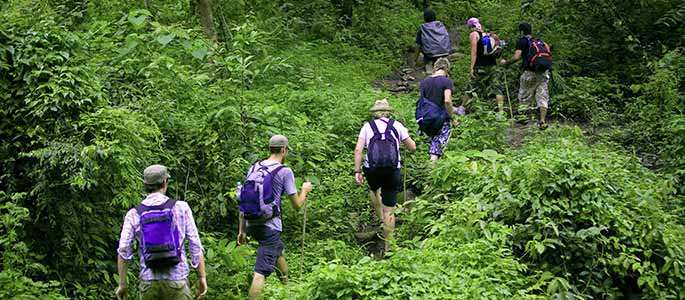
The Kilauea Iki Trail is the park’s signature hike, a 3.3-mile loop that drops about 400 feet through rainforest onto the floor of Kilauea Iki crater. You walk across a solidified lava lake left by the 1959 eruption, with steam still rising from its cracks.
Allow 2 to 3 hours for the loop, and start early, since parking at the trailhead fills fast. The climb back out is steady, so carry water and wear sturdy, closed-toe shoes for the sharp lava rock.
Just up the road, the Thurston Lava Tube (Nahuku) is a cave about 500 years old, formed when lava drained out of a flow and left a hollow tunnel. Bring a headlamp, since the tube is dim and the floor is uneven.
Great Hawaii Tour tip: arrive in the mid-afternoon, hike in daylight, then stay for the lava glow after sunset. Great Hawaii Tour recommends checking the USGS update that morning, since lava only shows during an eruptive episode.
Chain of Craters Road – A Drive Through Lava Fields
Chain of Craters Road runs 19 miles from the summit down to the ocean, dropping about 3,700 feet through old lava flows, pit craters, and black rock fields. It is one of the great scenic drives in Hawaii, and it ends where lava once crossed the road itself.
Stop at the Holei Sea Arch, a natural rock arch carved by waves at the end of the road, and at the Pu’u Loa Petroglyphs Trail, where ancient Hawaiian carvings cover the lava. The Devastation Trail, a flat 1-mile round trip, crosses the barren ground left by the 1959 eruption.
Fill your tank before you enter the park, since there is no fuel inside. Allow at least 2 hours for the drive with stops, and more if you walk the petroglyph trail.
Punalu’u Black Sand Beach – Turtles on Black Sand
Punalu’u Black Sand Beach sits about 30 miles south of Hawaii Volcanoes National Park, a 40 to 45-minute drive on Highway 11. Its jet-black sand formed when lava poured into the ocean and shattered as it cooled, and it makes a striking contrast with the turquoise water.
Honu, the Hawaiian green sea turtles, often rest on the sand here, and it is one of the most reliable places on the island to see them. Keep your distance and never touch them, since they are protected by law.
Swimming is discouraged because the water is rough and rocky, but the beach is perfect for photos and a picnic. Note that the county park was closed in late 2026 after its lease ended, so check current access before you drive down.
Volcano Village – A Quiet Base Near the Park
Volcano Village sits just outside the park gates, a small town of lodges, art galleries, and farm-to-table restaurants. It is the natural base for Kilauea Volcano, especially if you want to stay for the night glow and start hiking early.
Inside the park, Volcano House is the only hotel on the property, and it books up fast during eruption episodes. In the village, Kilauea Lodge is a long-running favorite, and the Volcano Winery pours wines made from Hawaiian honey and grapes.
Evenings in the village are cool and quiet, a world away from the coast. Pack a warm layer, since the summit area sits near 4,000 feet and the temperature drops fast after dark.
How to Reach, Facilities, and Planning Tips
Open Time
| Day | Timing |
|---|---|
| Monday | Open 24 hours |
| Tuesday | Open 24 hours |
| Wednesday | Open 24 hours |
| Thursday | Open 24 hours |
| Friday | Open 24 hours |
| Saturday | Open 24 hours |
| Sunday | Open 24 hours |
Hawaii Volcanoes National Park is open 24 hours a day, 365 days a year. Entry is $30 per private vehicle, $25 per motorcycle, or $15 on foot or by bike, valid for 7 days.
Best Time to Visit
The shoulder months of April to May and September to October give the best mix of drier weather and lighter crowds. Winter, from November to March, is Hawaii’s wet season, and the park sits near 4,000 feet, so expect rain and cooler air.
For lava viewing, the hour before dawn or after sunset is best, since the glow shows against the dark. Arrive in the mid-afternoon to hike first, then settle at an overlook as the light fades.
Getting There
Fly into Hilo International Airport (ITO), about 45 minutes from the park entrance — the closer choice if the volcano is your main goal. From Kailua-Kona, the drive takes about 2 to 2.5 hours across the island.
From Hilo, take Highway 11 south to the park entrance, then Crater Rim Drive to the summit area. A rental car gives you the most freedom, since the park’s sights are spread out.
What to Bring
Pack a rain jacket, a warm layer, sturdy closed-toe shoes, a headlamp, sunscreen, and plenty of water. The summit is cool after dark, and the lava rock is sharp and uneven underfoot.
A dust mask can help if tephra is falling near an active episode, but it does not block sulfur dioxide gas. Check vog advisories if anyone in your group has breathing trouble.
Facilities and Fees
Entry is $30 per private vehicle, valid for 7 days. The Hawaii Volcanoes Annual Pass is $55, and the America the Beautiful Pass ($80) covers every federal fee area for a year. No timed-entry reservation is needed for general access.
Food and fuel are limited inside the park, so stock up in Hilo or Volcano Village. Volcano House has a restaurant and lodge inside the park, and the village has cafes, shops, and galleries.
Accessibility
The summit overlooks along Crater Rim Drive are reachable by car, and the Steam Vents and Devastation Trail are short, flat walks. The Kilauea Iki Trail and lava tube involve uneven ground, steep sections, and low light, so they suit sure-footed walkers.
Check the NPS current conditions page before you go, since trails and overlooks close during volcanic unrest. Stay on marked trails and behind barriers at all times.
Location Map
Find Kilauea Volcano on the map below — the summit area of Hawaii Volcanoes National Park on the Big Island.
View Kilauea Volcano on Google Maps
Frequently Asked Questions
Is Kilauea Volcano erupting right now?
Kilauea Volcano has erupted in episodes since December 23, 2024, with lava fountains inside Halema’uma’u Crater and quiet pauses between episodes. Check the USGS Hawaiian Volcano Observatory update on the morning of your visit, since lava is only visible during an episode.
How much does it cost to visit Kilauea Volcano?
Entry to Hawaii Volcanoes National Park costs $30 per private vehicle, $25 per motorcycle, or $15 on foot or by bike, and the pass is valid for 7 days. The park is open 24 hours a day, and no timed-entry reservation is needed.
What is the best time of day to see lava at Kilauea Volcano?
The best time to see lava at Kilauea Volcano is the hour before dawn or after sunset, when the glow shows clearly against the dark. Lava is only visible during an eruptive episode, so check the USGS update before you drive up.
How long is the Kilauea Iki Trail at Kilauea Volcano?
The Kilauea Iki Trail is a 3.3-mile loop that drops about 400 feet through rainforest onto a solidified lava lake from the 1959 eruption. Allow 2 to 3 hours, start early for parking, and wear sturdy shoes for the sharp lava rock.
How far is Punalu’u Black Sand Beach from Kilauea Volcano?
Punalu’u Black Sand Beach is about 30 miles south of Hawaii Volcanoes National Park, a 40 to 45-minute drive on Highway 11. Honu (green sea turtles) often rest on its black sand, but check current access first, since the county park was closed in late 2026.
Can you drive to the summit of Kilauea Volcano?
Yes, you can drive to the summit of Kilauea Volcano on Crater Rim Drive, with overlooks at Uekahuna, Kilauea Overlook, and Wahinekapu. The closest airport is Hilo (ITO), about 45 minutes from the park entrance, while Kailua-Kona is about 2 to 2.5 hours away.
Conclusion
Kilauea Volcano is the rare place where you can watch the Earth being built in real time, then walk across a lava lake, crawl through a lava tube, and end the day on a black-sand beach. It rewards a full day, and it rewards patience, since the lava shows on its own schedule.
Keep exploring the Big Island with our Island of Hawaii guide, the Sulphur Banks guide, the Kipuka Puaulu Trail guide, the Mauna Kea Summit guide, and the Steam Vents guide, or join the Grand Circle Island Tour and the Big Island Hawaii Volcano Eco Adventure.
By Great Hawaii Tour — plan your Hawaii adventure with local guides you can trust.